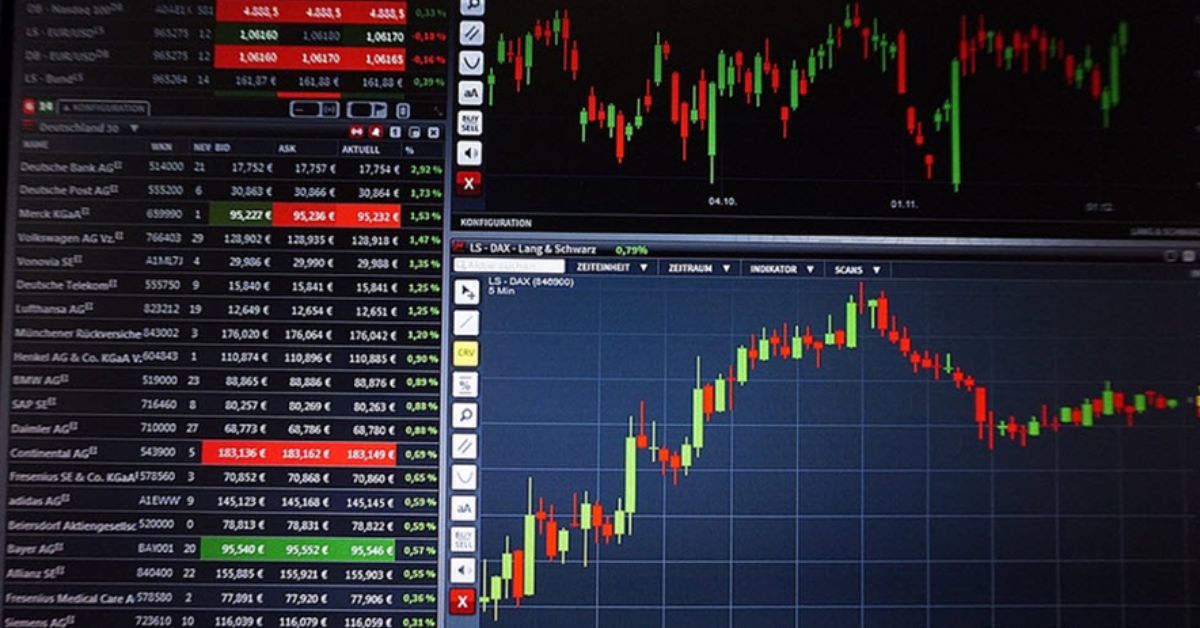
Most markets sell ownership or claims on cash flows. Currencies sell relative value, one money priced against another. That single twist changes almost everything: how prices move, what drives them, and how risk shows up on a Tuesday morning. For a quick primer on instruments and order mechanics, scan the overview at FX trading; then stack the differences below against stocks, bonds, crypto, commodities, and real estate.
1) Market Structure: Pairwise, OTC, and Nearly Around the Clock
Equities live on centralized exchanges with opening bells and closing auctions. Bonds and FX are mostly over-the-counter, but FX runs 24/5 across global sessions, Sydney to Tokyo to London to New York, so price discovery is continuous. That structure means fewer exchange halts and more seamless handoffs, yet it also concentrates liquidity in certain hours. Real estate is the opposite: negotiated, slow, illiquid.
2) Liquidity and Depth: The Majors vs. Everything Else
EURUSD, USDJPY, GBPUSD, these pairs are among the deepest markets on earth. Tight spreads in active hours let positions be sized with precision. Small-cap stocks and long-tail crypto pairs, by contrast, can widen wildly when attention fades. Commodities vary: crude and gold are deep, niche ags are not. Deep FX books don’t remove slippage in fast tape, but they keep the day-to-day friction low.
3) What Moves Price: Macro Engines, Not Company News
Stock prices hinge on earnings, guidance, competitive moats. Bonds hinge on inflation and credit risk. FX is macro distilled: interest-rate differentials, central-bank policy, growth surprises, terms of trade, capital flows. A single data print, CPI, NFP, PMI, can shift rate expectations and reprice a currency in minutes. This favors a workflow built around calendars, scenarios, and “what-if”s rather than product launches or quarterly calls.
4) Leverage Is Native (Handle with Care)
Leverage exists in many markets, but in FX it’s standard equipment. Micro-lot granularity makes precise risk sizing possible, yet the mechanical ease hides danger. A one-percent move on oversized margin erases a week’s work quickly. Stocks often limit margin; real estate uses leverage too, but with slow feedback loops. Crypto derivatives offer high leverage but layer on 24/7 gap risk and funding-rate swings. In FX, set position size from stop distance and volatility first, not from target return.
5) Shorting Is Built In
Shorting stocks requires borrow and can fail when borrow dries up. Shorting real estate is basically impossible. In FX every position is long one currency and short another by design. That makes expressing macro views straightforward: strong dollar vs. weak euro, higher-carry vs. lower-carry, risk-on vs. risk-off. The pair structure also means “market beta” is relative; there’s no S&P-style benchmark to hug.
6) Costs: Spread, Commission, Swaps, Not Management Fees
The all-in FX cost is spread + commission (if applicable) + swaps/financing + realized slippage. Equity investors often face brokerage fees and fund expense ratios; real estate has closing costs and maintenance; crypto perps add funding rates that flip intraday. In FX, carry (the interest-rate differential) pays or charges daily and quietly shifts P&L for swing and position trades. A strategy that ignores swaps can look good on paper and sag in reality.
7) Time Horizons and Holding Mechanics
Dividend investors harvest quarterly cash, bond holders clip coupons, landlords collect rent. Currency longs don’t receive earnings; they receive (or pay) carry. Intraday traders prioritize microstructure and session behavior. Swing traders watch policy cycles, yield curves, and macro momentum. The timeline is flexible, but the economics differ: returns come from price change plus carry, not from underlying cash flows.
8) Volatility, Gaps, and Event Risk
Earnings gaps in equities can be violent; real estate gaps are rare but catastrophic when they happen. FX trades through most of the week, which smooths some moves, yet Monday opens can still gap after weekend news, and spreads widen around top-tier data. Crypto is 24/7, removing calendar gaps but replacing them with overnight liquidation cascades. In FX, event maps and position scaling around data are part of the craft.
9) Diversification and Correlation
FX can diversify equity-heavy portfolios because drivers sometimes diverge. A strong-USD regime often pressure-tests commodities and emerging-market assets; a weak-USD regime can lift them. Still, correlations are regime-dependent, during global stress, the dollar and yen can attract flows while risk currencies fade. Treat FX as an adjustable hedge or an active sleeve, not as a passive diversifier that always zigs when others zag.
10) Tooling and Workflow
A stock picker needs filings, sector comps, and call transcripts. A landlord needs location data and financing terms. FX traders live by calendars, rate expectations, positioning reports, and robust terminals with one-click execution, partial close, and alerting. Strategy testers and risk scripts (for fixed-percent sizing) reduce human error. The best setups remove friction rather than add cleverness.
11) Risk Is Different Because It’s Everywhere
Every investment carries risk; FX makes it obvious. The same pair can be a macro trend, an intraday mean-reversion scalp, or a carry vehicle, with distinct risk shapes. That flexibility is power and trap. The guardrails are simple: fixed risk per trade, stops that reflect actual volatility, hard daily/weekly loss limits, and no “averaging down to get even.” Brokers with negative balance protection and clear stop-out policies add a final safety layer when markets jump.
Also Read, Benefits of Trading With an Option Chain
Who FX Fits, and Who It Doesn’t
- Fits: Active traders who want granular control, hedgers with currency exposure, systematic strategies that rely on deep liquidity and consistent costs.
- Doesn’t: Set-and-forget savers looking for passive income streams; investors whose edge is reading business quality or improving physical assets. For those, equities, bonds, and real estate do the heavy lifting.
A Quick Switcher’s Checklist
- Choose a regulated counterparty with transparent execution and published typical spreads.
- Trade two liquid pairs at first; log spread at entry, realized slippage, and session behavior.
- Model carry explicitly if holding overnight.
- Align leverage with the stop, not with ambition.
- Respect the calendar; size down or step aside for top-tier releases.
Where Currencies Earn Their Keep
FX isn’t a better version of stocks, bonds, or property. It’s a different game, fast plumbing, macro drivers, and precision risk framed by pairs. For capital that needs agility, clear hedges, and granular position control, currencies deliver tools other markets can’t match. For capital that seeks cash flows or patient compounding, other lanes still rule. Know which outcome is needed, pick the lane accordingly, and let the structure work in your favor rather than against it.